The Fashion Creator Business Manual: A Practical Guide to Turning Style Into Income
Building a fashion creator business takes more than great outfits—it needs a clear offer, consistent content, and simple systems for getting paid. This manual is designed to help fashion-focused creators translate personal style into a repeatable, professional business setup with steps that can be implemented immediately.
If you want a ready-to-use framework, start with Get the Fashion Creator Business Manual, then pair it with a profile tune-up like TikTok Bio & Profile Checklist and a long-term income plan like Multiple Revenue Streams: A Creator’s Manual.
What this manual helps fashion creators build
- A creator brand foundation: niche, point of view, and an audience promise that stays consistent across platforms.
- A monetization map: clear paths from content to income without relying on a single platform.
- A simple weekly operating system: content planning, outreach, and deliverables that fit real life.
- A productized approach: turning styling, recommendations, and expertise into sellable assets.
- Confidence in pricing and positioning: communicating value without over-explaining.
These building blocks reduce the “post-and-hope” cycle by connecting what you publish to how you get paid, whether that’s UGC, affiliate sales, services, or digital products.
Who it’s for (and who it’s not)
- Best for: fashion creators who want structure for growing income—UGC creators, outfit stylists, trend commentators, thrift/haul creators, and capsule-wardrobe educators.
- Helpful for: creators starting from zero who want a step-by-step baseline for profiles, content pillars, and offers.
- Not ideal for: creators looking for advanced agency-level negotiation templates only, or those who want a purely aesthetic lookbook without business systems.
- Works whether monetization comes from: brand deals, affiliate links, digital products, services, or a combination.
Quick fit check
| Situation | What to focus on first | What the manual supports |
|---|---|---|
| Posting consistently but income is inconsistent | Offer clarity and simple funnels | Monetization paths and content-to-offer mapping |
| Good engagement but weak conversions | Profile and CTAs | Positioning, calls-to-action, and buyer journey basics |
| Getting inquiries but unsure how to quote | Packaging and pricing | Offer packaging, value framing, and pricing confidence |
| Burned out from daily posting | Weekly system and batching | Planning routines and sustainable workflows |
Core building blocks: brand, niche, and signature style
A fashion creator brand doesn’t need to be complicated—it needs to be recognizable. The goal is to be specific enough to be memorable, but flexible enough to grow.
- Define a niche: choose a “home base” that can generate endless looks (for example, “office-to-evening outfit formulas,” “thrifted minimalism,” or “size-inclusive denim styling”).
- Create a signature: repeatable elements like silhouettes, a color story, styling rules, or a consistent format such as “3 ways to wear.”
- Clarify the audience promise: name the problem you solve—confidence, time-saving outfits, trend translation, budget styling, or closet clarity.
- Set 3–5 content pillars: pick pillars that connect directly to income: education, try-ons, reviews, styling, and behind-the-scenes.
When your niche and signature are clear, brands know what to hire you for, and followers know what to come back for.
Content that leads to paid opportunities
Content becomes business-building when it follows a simple ladder: reach first, then trust, then a clear next step.
- Awareness posts (reach): trend commentary, seasonal “what I’d wear” ideas, quick outfit formulas, or thrift flips that spark shares and saves.
- Trust posts (proof): try-ons with honest fit notes, side-by-side comparisons, styling “why it works” breakdowns, and mini case studies (like “three outfits from one blazer”).
- Conversion posts (next step): a direct CTA to your link hub, affiliate storefront, service booking, or brand inquiry form.
Repeatable series reduce decision fatigue and train your audience to expect value. Examples include “Monday Outfit Formula,” “One Item, Five Looks,” and “Budget Swap.” Proof doesn’t require oversharing—use deliverable clips, testimonials, and measurable outcomes when possible (saves, clicks, sign-ups, or sales).
For platform-specific guidance, cross-check creator recommendations from Instagram Creator Best Practices and the TikTok Creator Portal.
Revenue streams for fashion creators (and how to stack them)
Relying on one income source can make your month feel unpredictable. A cleaner approach is stacking: a stable base plus a higher-ticket layer.
If you use affiliate links or sponsored content, align with disclosure best practices from the FTC Endorsement Guides so your audience trust stays intact.
Pricing, pitching, and professional workflow
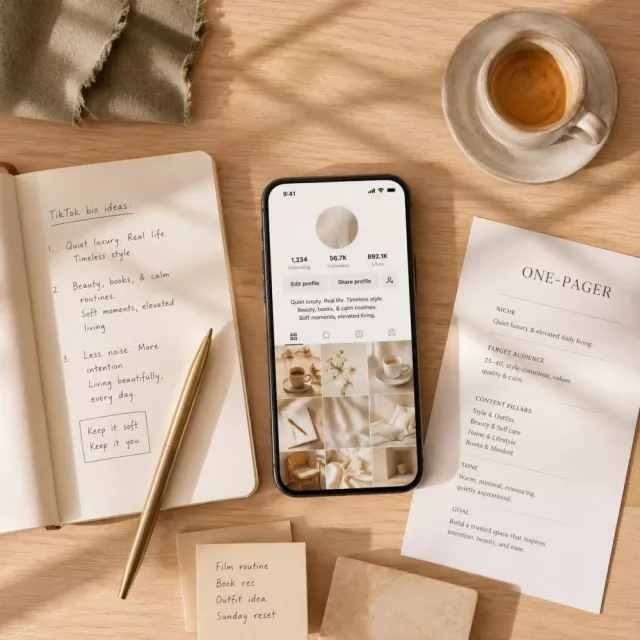
Small upgrades—like tightening your bio, pinning a “start here” video, and using one clear CTA—can lift conversions quickly. For a quick cleanup, use TikTok Bio & Profile Checklist.
How to use the manual in 7 days (a lightweight sprint)
To make the sprint easier to repeat month after month, combine the Fashion Creator Business Manual with Multiple Revenue Streams: A Creator’s Manual so each post supports a bigger income plan.
FAQ
Is this manual useful for beginners with a small following?
Yes. Clear positioning, simple systems, and a defined offer can work with any audience size, and the steps focus on foundations like niche, profile clarity, and straightforward monetization paths.
What income streams does it support for fashion creators?
It supports brand deals/UGC, affiliate income, digital products, and services. It also encourages stacking a stable base (affiliate or digital) with higher-ticket opportunities (brand work or services).
How quickly can the steps be implemented?
Some improvements can happen the same day (profile and CTA updates), a basic system can be set up within a week, and consistent results typically become clearer over 30 days of steady execution.